
Over the past few weeks, as I prepared the game's prototype for its first playtest with other people, I realized something I had been avoiding admitting... the game wasn't working!
My day job has kept me very busy, leaving me with little free time for game development. Even so, I managed to implement some important mechanics that were still missing and polish a few that were already there. During this process, I spent dozens of hours testing the prototype. The more I played it, the more certain I became that the experience did not reflect the game I wanted to create.
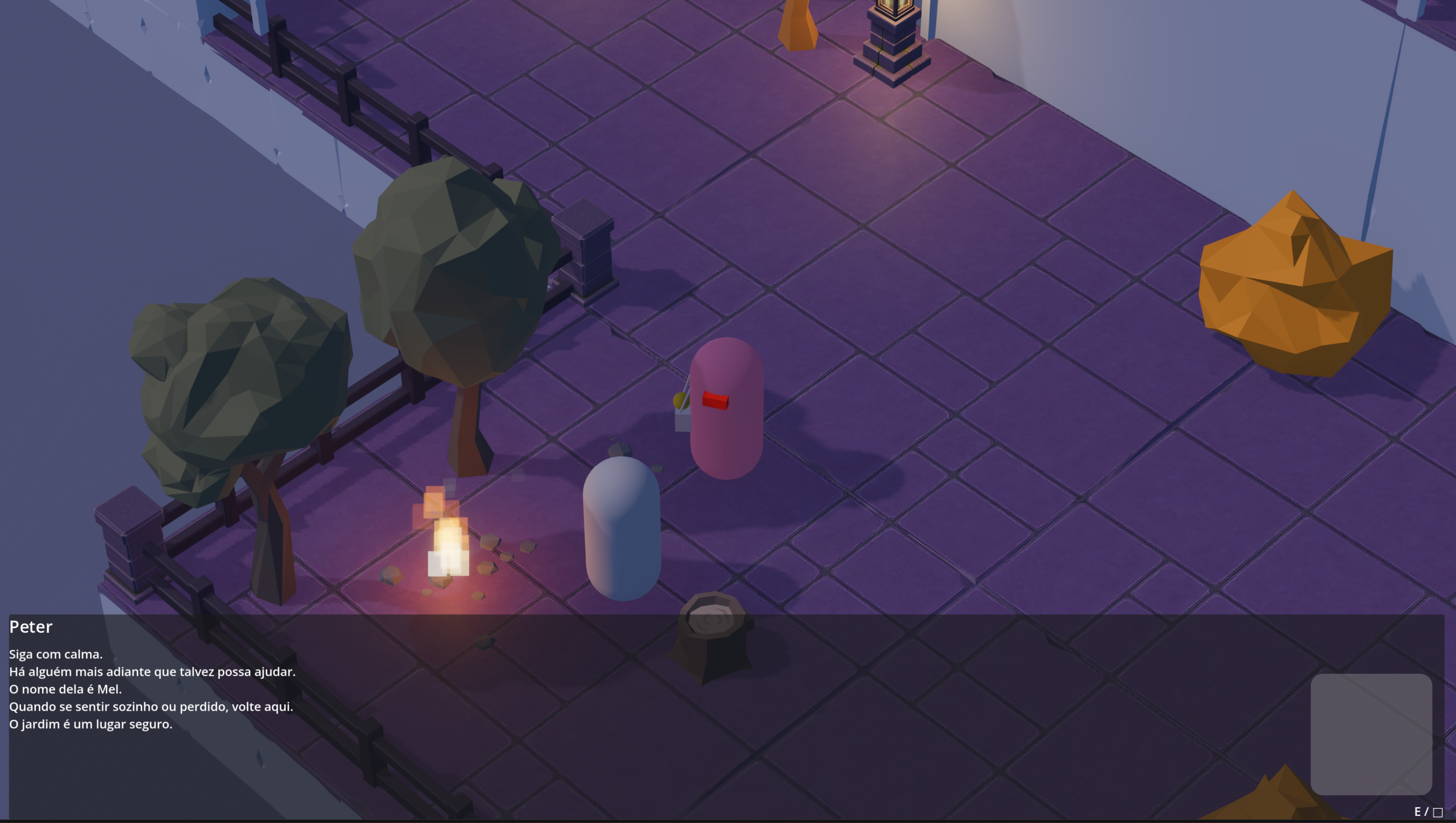
The importance of a prototype
From the beginning, I knew it would be important to build a prototype to validate my idea. That was exactly what I had planned to do. I created a playable prototype that brought together the core mechanics I intended to carry into the final game. I implemented minimal versions of those mechanics in Godot using placeholder 3D models. Each system seemed to work in isolation. The problem became clear when I put everything together and started evaluating the experience as a complete game.
The more I played it, the more I felt that something was wrong. At first, I didn't think much of it, but that feeling kept growing. After giving it a lot of thought, I realized there wasn't just one isolated problem. The prototype simply wasn't fun.
In its current state, the prototype's setting still doesn't convey the dreamlike, emotional atmosphere I envision for this project. The puzzles, which should feel intriguing and spark curiosity, feel more like obstacles to get through. The story is there, but it doesn't progress at the pace needed to sustain the experience.
The mechanics exist, but they don't come together into the game I had imagined.
There is a certain irony in that: the first area is about denial. For a while, I also avoided admitting what the prototype had already been showing me.
So how did I not see it sooner?
I think everything works perfectly in our heads. We imagine the scenes, mentally fill in the parts that don't exist yet, and convince ourselves that our ideas are better than they really are. That is why it is so important to take them out of our imagination and put them into the real world. Some ideas work. Others need to change. And some simply aren't good enough.
What happens now?
I decided to end this version of the prototype before moving on to external playtesting.
That doesn't mean throwing away all the work. Some of the code, tools, and knowledge I gained can still be reused. What I'm discarding is this version of the experience.
Now I'm going back to the drawing board to revisit the project's core pillars and build a smaller, more focused prototype. Before adding more content, I need to validate three fundamental things:
- whether the atmosphere conveys the feeling I'm aiming for.
- whether the puzzles spark curiosity and feel like part of the world.
- whether the story progresses at a pace that supports exploration.
I'm not going back to square one. I now have a much clearer understanding of what doesn't work and what the next prototype needs to prove.
The current prototype didn't work as a game, but it did exactly what a prototype is supposed to do.
Join the conversation
Leave a comment
Share a thought, correction, question, or note. It appears after moderation.
Comments
No comments yet.